
The Shape Within Shape
A Ritual Commentary On Slipping Form

The Shape Within Shape
I lit the flame, I drew the sign,
I marked the gate in ash and wine.
My voice was firm, my hand was true,
but something old slipped softly through.
It moved beneath the sacred lines,
a throb that didn’t heed design.
The rite was mine, or so it seemed,
until the air began to breathe,
and the skin beneath my skin
leaned closer to the door.
I felt my ribs unlock.
Loosen.
Like a mouth opening under water.
The chant wavered
from heat.
From that other rhythm
I didn’t write
but somehow spoke.
The rite uncoiled.
My hands were shaking.
And something in me
started waking.
Not a god.
Not one I knew.
It was breath.
It was bite.
It was sweat with memory.
I said the next line,
but it wasn’t mine.
The vowels curled like smoke,
and the consonants dragged their nails
down my spine.
I kissed the pulse between two words
and tasted blood beneath the verse.
The spell dissolved, the shape fell through,
and I became the thing I drew.
Now silence holds the shape I named.
Somewhere in me
it still chants.
Still opens.
Still wants.
XXX
The Rhythm That Breaks the Hand Holding It
The poem begins in tight architecture: meter steady, rhyme obedient, cadence clean. It is the old spell-form, the illusion of mastery. Flame lit. Gate marked. Voice firm. Line controlled. Beneath that scaffolding, something shifts. The poem lets you hear it early: a throb beneath the sacred lines, a pressure swelling under the skin of the verse.
The Wound-World presses upward and the form buckles. Rhyme slips. Rhythm stutters. Syntax cracks like bone under breath. The poem mirrors the speaker’s ribs loosening, each break in the meter another joint giving way. What rises is not chaos; it is the deeper current. The other rhythm. The one that uses the speaker’s mouth the way roots use soil.
The voice changes texture. Vowels soften into smoke. Consonants rasp like nails. The poem sheds its couplets and stands on nerve alone. Structure dissolves into sensation. The rite uncoils. The page becomes a field of trembling. This is not loss of control, it is the return of the older pulse, the one stored in sweat and memory, the one waiting behind language for the moment form falters.
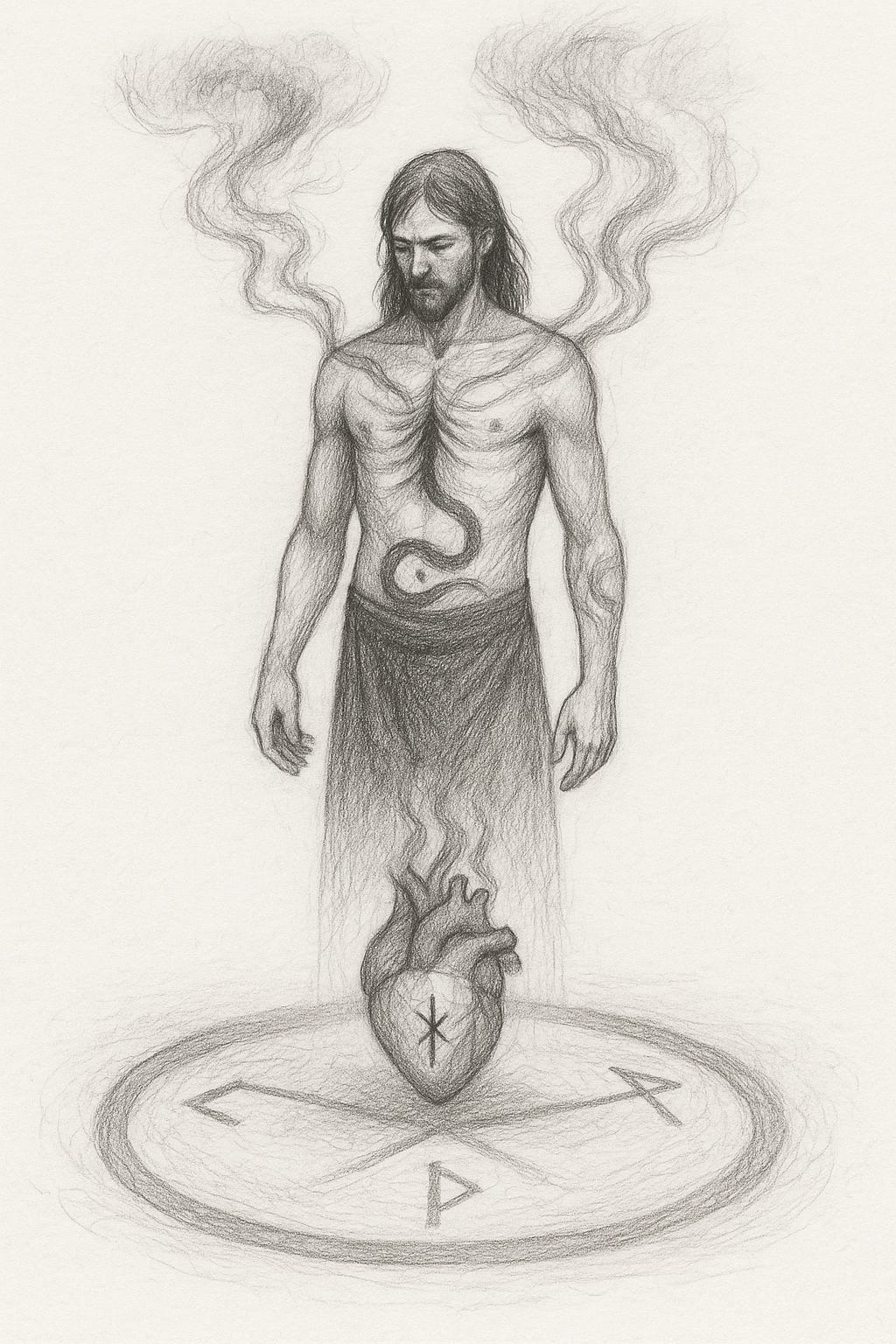
When the speaker “became the thing I drew,” the poem completes its metamorphosis. Form becomes flesh. Spell becomes organism. Chant becomes body. It is the core Wound-World truth: every shape drawn is a door, and every true door opens inward first.
The ending is quiet, not resolved. Silence holds what words could not. Somewhere inside, the rhythm the speaker tried to master still moves, still opens, still hungers. The form broke, and something older stepped through.
[I leave most of my work in the open. The paid tier carries the deeper workings: ritual commentary, hidden essays, and early drops. If you can offer $5 monthly, I return that gift in kind. If you cannot, write me and I will still grant access.]